"Get $15,000 in upgrades with our incentive!" "4.99% financing for the first two years!" "We'll pay your closing costs!"
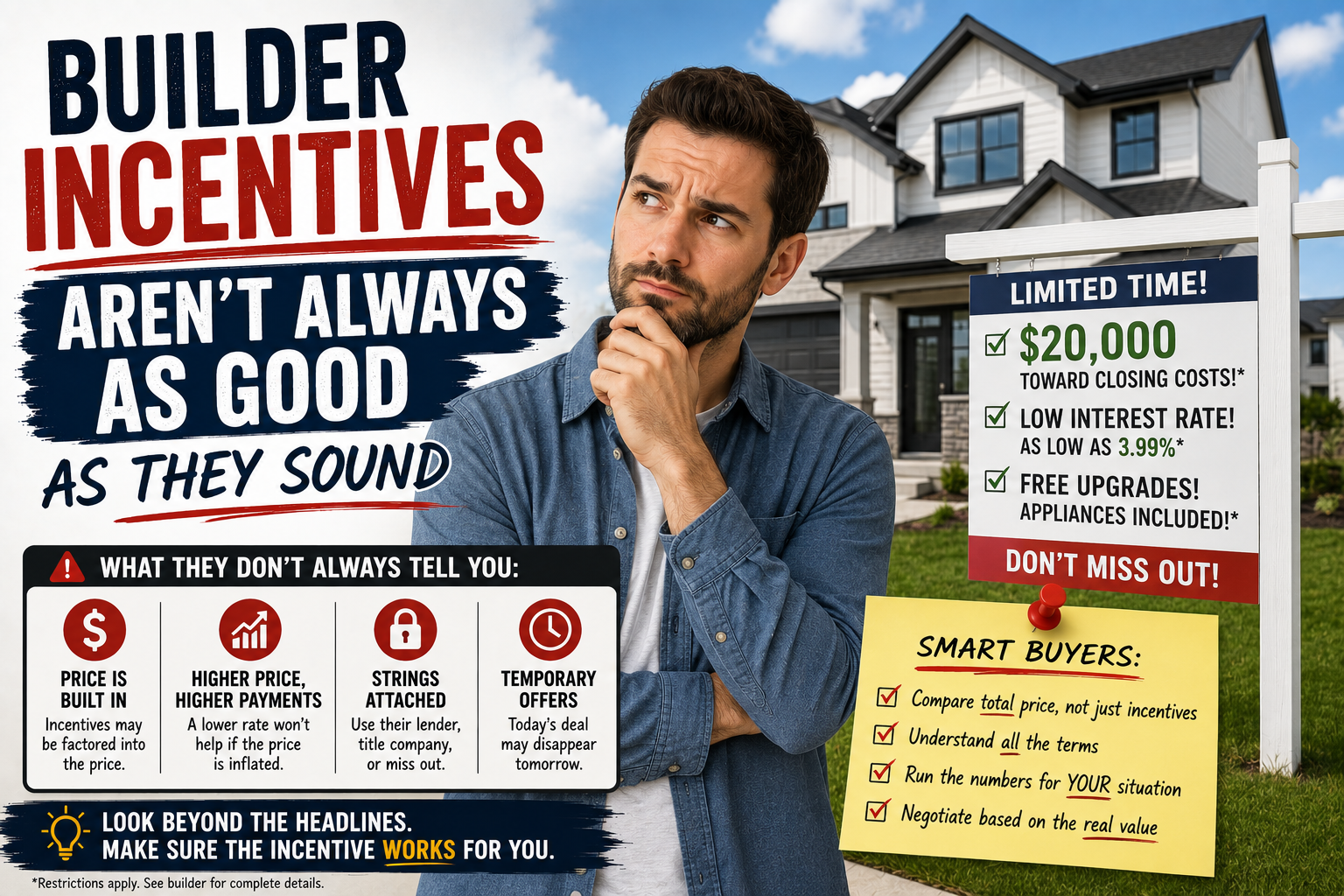
Walk into any new community in Northern Colorado and you'll see signs advertising builder incentives. They sound incredible. But here's what I'm seeing in practice: these incentives aren't always as good as they appear.
Thinking about buying new construction?
Get expert guidance on builders, incentives, and contracts — no pressure.
The Upgrade Incentive Trap
"$20,000 in design upgrades!" Sounds amazing, right? Except:
- The incentive is usually applied to upgrades you'd probably want anyway
- The dollar amount sounds big, but it often covers baseline upgrades—not the premium finishes you see in the model home
- Some builders inflate the "retail value" of upgrades to make their incentive look bigger
Ask: What specifically is included? What's the actual cost if I don't use your incentive? Can I take the cash instead?
The Financing "Deals" Have Strings
The 4.99% or 5.99% financing deals sound incredible in a high-rate environment. But read the fine print:
- Temporary rates: Many builder financing deals are "buydowns"—the rate drops after a few years. What's the rate after the buydown period?
- Higher purchase price: Sometimes builders bake the buydown cost into the home price. You might be better off with a standard rate and a lower purchase price.
- Required lender: Often these deals only apply if you use the builder's preferred lender—which may not be the best rate available.
- Point costs: The "low rate" might come with origination points that cost you thousands upfront.
Closing Cost Concessions
"We'll pay up to $10,000 in closing costs!" This is common, but:
- The concession amount is often capped—and your actual closing costs might exceed it
- The builder may only pay for certain items, not others
- Sometimes the concession is factored into the purchase price, so you're paying for it either way
How to Evaluate Builder Incentives
Here's my advice for evaluating any builder incentive:
1. Get the numbers in writing Ask for a breakdown: What's the incentive? What does it cover? Are there restrictions? What's the actual cash value?
2. Compare to the competition Get incentives in writing from 2-3 builders. Compare what's actually included, not just the headline number.
3. Run your own math Use a mortgage calculator to see what your monthly payment would be:
- With the builder incentive and their financing
- With a standard loan and no incentive
Sometimes the "deal" costs more over time.
4. Ask about the price Often, a builder will offer a better price if you skip the incentive entirely. It's worth asking: "What if I don't want the financing package—can you adjust the price?"
5. Get independent financing advice Before you sign, talk to a lender who isn't connected to the builder. They can tell you if the builder's financing is actually competitive.
What Incentives Are Worth It
In my experience, these incentives tend to be more valuable:
- Lot premiums: If you want a specific lot and the builder is motivated, they may reduce or waive the premium
- Known upgrades: If you're planning specific upgrades anyway, the incentive can help
- Timeline flexibility: Some builders will include closing date flexibility as an incentive—which can be valuable in a transition
The Bottom Line
Builder incentives exist to close deals. They're designed to look attractive, and some are genuinely helpful. But you can't evaluate them without understanding what's behind the numbers.
If you're comparing builder incentives in Northern Colorado, I'm happy to help you run the math and understand what you're actually getting. Sometimes the best incentive is simply a better price on the home itself.