If you’re researching Northern Colorado new construction, you’ve probably already noticed the options can feel endless—production builders, semi-custom homes, quick move-in inventory, build-to-order lots, incentives, and enough fine print to make your coffee nervous.
Thinking about buying new construction?
Get expert guidance on builders, incentives, and contracts — no pressure.
This Guide Is Your Buyer-Advocate Playbook
In this guide, you’ll learn how the new construction process works, what it really costs, how to protect yourself, and how to choose the right community in places like Windsor, Timnath, Severance, Fort Collins, Johnstown, and Loveland.
Why Northern Colorado New Construction Is So Popular
Northern Colorado continues to attract a wide range of buyers, including:
- Relocation buyers coming from Denver, out of state, or remote work situations
- First-time buyers looking for lower maintenance and builder warranties
- Move-up buyers who want modern floorplans, newer systems, and better energy efficiency
New construction homes can offer major advantages, such as:
- Newer systems like the roof, HVAC, and appliances
- Modern layouts with open concepts, larger kitchens, and home offices
- Builder warranties and fewer immediate repair needs
That said, new builds also come with unique risks and costs that resale buyers do not always face.
Start Here: The 3 Types of New Construction You’ll See
1. Build-to-Order (From Dirt)
With a build-to-order home, you typically choose a floorplan, select a lot, make design selections, and wait through the construction timeline.
Best for: buyers who want personalization and can handle a longer build process.
2. Spec or Quick Move-In (QMI)
With a spec or quick move-in home, the builder has already started—or even finished—the property. That usually means less customization, but a much faster closing timeline.
Best for: buyers working with deadlines, such as lease endings, school timing, or relocation.
3. Semi-Custom or Custom
These homes usually offer more design flexibility, more control over layout changes, and sometimes more lot options.
Best for: buyers who prioritize craftsmanship, personalization, upgraded finishes, or unique lot locations.
Step-by-Step: The New Construction Buying Process
Step 1: Get Financing Aligned Early
Even if you think you may use the builder’s preferred lender, it is smart to begin with a strong financing baseline.
Start by:
- Getting fully underwritten if possible, since that is stronger than a basic pre-approval
- Asking about rate locks and extended lock options for longer build timelines
- Understanding your required down payment, closing costs, and reserves
Pro tip: your payment can change between contract and closing if interest rates move and you are not protected by a lock strategy.
Step 2: Choose the Right City and Community
Not all Northern Colorado communities feel the same. Commute patterns, school zones, HOA structures, tax districts, and neighborhood design can vary dramatically.
Here are a few common buyer considerations by area:
- Windsor: popular for its master-planned feel and access to I-25 and Highway 34
- Timnath: attractive for buyers wanting proximity to Fort Collins amenities and newer neighborhoods
- Severance: often appeals to buyers looking for more space at a lower price point
- Johnstown: convenient for I-25 commuters and often has strong new build inventory
- Fort Collins: typically has fewer new construction pockets, but strong lifestyle appeal
- Loveland: offers a mix of established neighborhoods and newer growth with strong recreation access
Step 3: Understand the Builder Contract Reality
Builder contracts are very different from standard resale contracts. They are designed primarily to protect the builder.
Common differences include:
- Limited negotiation on contract terms
- Builder-controlled timelines
- Deposit rules and change-order fees
- Appraisal language and, in some cases, escalation provisions
This is one of the biggest reasons it helps to have your own Realtor—especially someone who understands builder contracts, incentive structures, and inspection timing.
Step 4: Pick a Lot and Floorplan Strategically
A home can look like a good deal on paper and still create headaches later if the lot location is not ideal.
When evaluating a lot, consider:
- Backyard exposure and sun patterns
- Proximity to busy roads, retention ponds, trails, or power lines
- Future build phases that may affect your view
- Grading and drainage, especially near slopes or berms
A premium lot is not always the best lot, and the cheapest one is not always the bargain it seems to be.
Step 5: Plan Your Design Selections Carefully
The design center is where many buyers accidentally body-slam their budget.
A smart upgrade strategy usually means prioritizing:
- Structural items you cannot easily change later
- Layout improvements
- Additional windows
- Ceiling height changes
- Garage configuration upgrades
Be cautious with purely cosmetic upgrades that may not add the same long-term value, such as:
- Overly expensive backsplash packages
- Trend-heavy finishes
- Design options that may not appraise well in your neighborhood
Ask for the design price sheet early and build a realistic selection budget before you start making choices.
The Hidden Costs of Buying a New Build
Many buyers compare a builder’s base price to resale pricing and assume the numbers work—until the add-ons start piling up.
Common hidden costs include:
- Lot premiums for corner lots, cul-de-sacs, greenbelt lots, or walkout-style grading
- Upgrades and options, including railings, lighting, cabinets, and flooring
- Landscaping, fencing, and sprinkler systems
- Window coverings, which are often not included
- Air conditioning, depending on the builder or package
- HOA setup costs and metro district taxes
- Rate lock costs for longer build timelines
Rule of thumb: many buyers end up 10% to 25% above base price once lot premiums and options are added, depending on the builder and what is actually included.
Builder Incentives: What They Are and How to Compare Them
Builders often prefer to offer incentives instead of directly cutting price.
Common incentive types include:
- Closing cost credits
- Temporary rate buydowns, such as a 2-1 buydown
- Free or discounted design packages
- Appliance packages
- HOA dues paid for a certain period
The right way to compare incentives is to ask:
What is my actual cost to close and what is my actual monthly payment with this incentive?
A large incentive is not always the best deal if it only works through a lender with a less competitive rate or stricter terms.
Can You Negotiate With Builders in Northern Colorado?
Yes—but not always in the way buyers expect.
What Is Usually More Negotiable
- Closing cost credits
- Rate buydowns
- Design center credits
- Quick move-in pricing
- Upgrade packages, especially near quarter-end
- Certain contingency-like protections, depending on the builder
What Is Usually Less Negotiable
- Base pricing on to-be-built homes
- Contract terms
- Timeline language
- Warranty language
Timing matters. Builders are often more flexible near the end of the month, quarter, or year—especially on standing inventory and quick move-in homes.
Timeline: How Long Does a New Build Take?
Typical timelines often look like this:
- Quick move-in homes: about 30 to 90 days
- Build-to-order homes: roughly 6 to 12 months
Several factors can slow the process down, including:
- Permit delays
- Weather issues
- Supply chain problems
- Labor and trade scheduling
Buyer tip: do not plan your lease ending or move-out date with zero buffer. New construction timelines are famous for optimism and occasional plot twists.
Inspection Phases: How to Protect Yourself on a New Build
A brand-new home can still have real issues. Inspections are not overkill—they are smart risk management.
1. Pre-Drywall Inspection
This phase can catch:
- Framing issues
- Rough plumbing problems
- Electrical concerns
- HVAC layout issues
2. Final Inspection
This inspection can identify:
- Missing items
- Finish defects
- Operational issues
- Drainage and grading concerns
3. 11-Month Warranty Inspection
Before the one-year warranty expires, this inspection can help identify:
- Nail pops
- Drywall cracking beyond normal settlement
- Mechanical concerns
- Signs of larger settlement issues
Pro tip: ask the builder in writing how punch-list items are tracked and what their typical service timeline looks like.
Appraisals, Escalations, and Gap Risk
Appraisals can get tricky in new construction communities, especially when:
- The neighborhood is still in early phases
- There are not many closed comparable sales
- Lot premiums and upgrades push the value above nearby homes
- The market changes during the build timeline
Ways to reduce appraisal risk include:
- Understanding the builder’s appraisal language before signing
- Choosing upgrades that fit neighborhood norms
- Considering quick move-in inventory if appraisal certainty matters
- Keeping cash reserves if the contract creates appraisal gap exposure
HOA, Metro Districts, and Taxes: What Buyers Miss
Some Northern Colorado communities come with costs that buyers do not fully understand upfront.
These may include:
- HOA dues
- Metro district taxes
- Special assessments or community-related fees
Make sure you request:
- HOA documents
- Current fee schedules
- Tax estimates
- Special district disclosures
These costs affect affordability just as much as principal and interest do.
Builder Warranties Explained
Most builders offer some version of:
- 1-year workmanship coverage for cosmetic or workmanship-related issues
- 2-year systems coverage for items like plumbing, electrical, or HVAC, depending on the builder
- 10-year structural coverage, often through a third-party warranty provider
Keep in mind that warranties usually come with maintenance expectations. Save your documentation and stay on top of items like:
- Caulking
- Filter changes
- Drainage maintenance
- Humidity control
- Landscaping around the home
Choosing the Right Builder in Northern Colorado
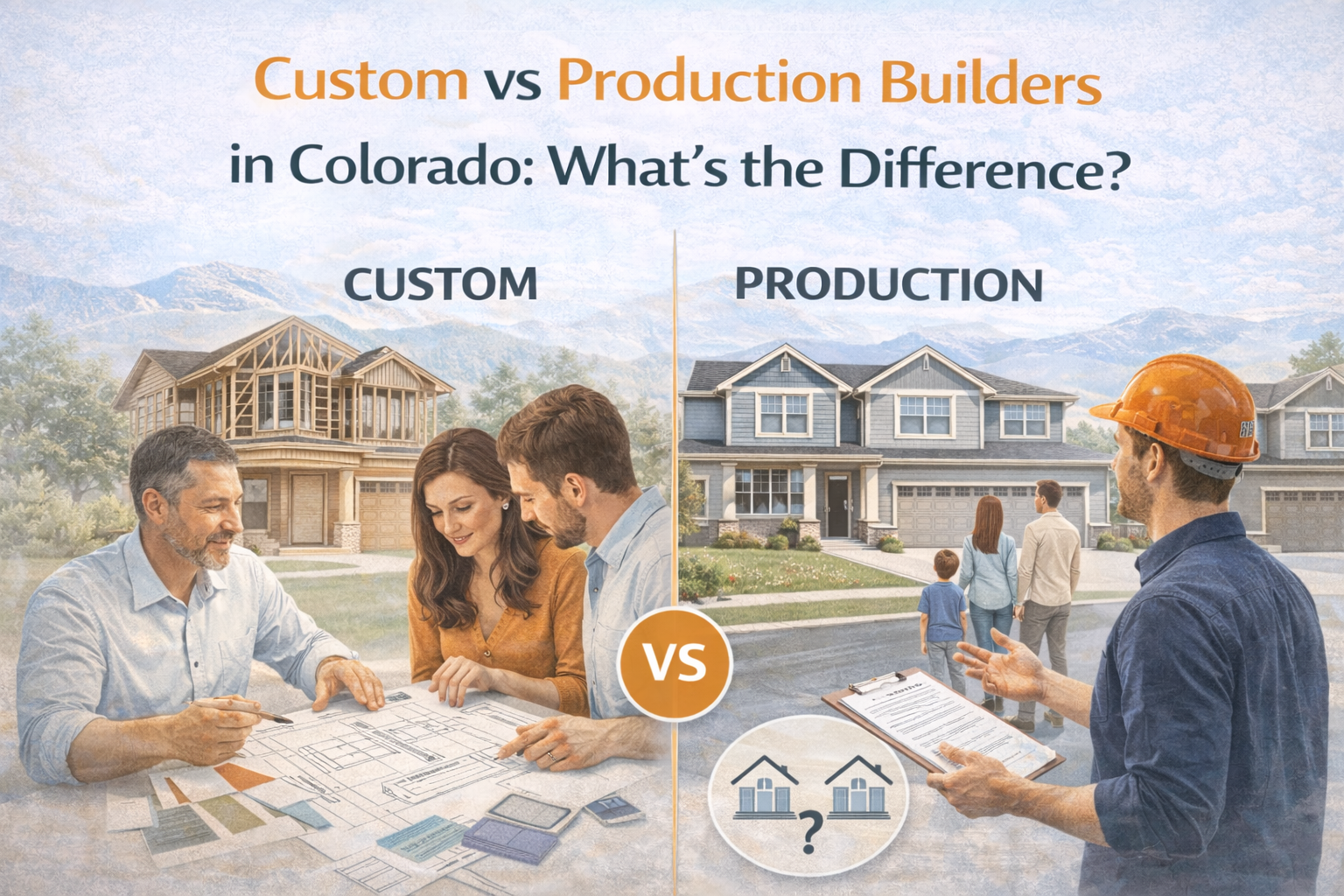
Buyers in Northern Colorado often compare both production and semi-custom builders.
Production Builders
Pros:
- Predictable process
- More community options
- Often stronger incentives
Cons:
- Less customization
- More standardized materials and finish packages
Semi-Custom Builders
Pros:
- More personalization
- Often stronger finish quality
Cons:
- Longer timelines
- Fewer incentives
- Higher price per square foot
Depending on the city and neighborhood, buyers often compare builders such as Richmond American, Lennar, DR Horton, KB Home, and various regional or semi-custom builders.
Buyer Mistakes to Avoid
Visiting a Model Home Without Representation
Many builders require your agent to be with you on the first visit or registered early in the process. Do not accidentally give up representation before the game even starts.
Budgeting Only for Base Price
Lot premiums, upgrades, landscaping, taxes, and HOA costs can move the total far beyond the advertised starting price.
Skipping the Pre-Drywall Inspection
This is one of the best chances to catch meaningful issues before the walls are closed up.
Over-Upgrading for Style Instead of Value
Prioritize upgrades that improve function, durability, or long-term livability.
Assuming Timelines Are Guaranteed
Always build in some flexibility for delays.
FAQ: Northern Colorado New Construction
Is buying new construction in Northern Colorado worth it?
It can be, especially if you value modern layouts, newer systems, warranties, and lower near-term maintenance. The key is understanding your true total cost and protecting yourself during the process.
Do I need a Realtor for new construction?
You are not required to use one, but it can make a major difference. Builder contracts, incentive comparisons, inspection timing, appraisal risk, and punch-list follow-up are all easier with an experienced advocate.
What is the best time of year to buy a new build?
Incentives and negotiability often improve near month-end, quarter-end, and year-end, especially on quick move-in inventory.
How much should I budget for upgrades?
A common range is about 10% to 25% above base price, depending on what is included and how far you go with selections.
Can I negotiate price with a builder?
Sometimes, but usually more on quick move-in homes than on to-be-built inventory. Incentives are often the most flexible negotiation tool.
Related Articles to Link Next
Use these as internal links throughout your site:
- Hidden Costs of New Construction in Northern Colorado
- Builder Incentives Explained: How Northern Colorado Buyers Save Money
- Can You Negotiate With Builders in Colorado?
Internal Linking Anchor Suggestions
Sprinkle these anchor phrases naturally in related blog posts:
- Northern Colorado new construction
- new construction homes in Windsor
- new builds in Timnath
- Severance new construction neighborhoods
- Johnstown quick move-in homes
- builder incentives in Northern Colorado
- pre-drywall inspection checklist
- new construction closing costs
Bottom Line: How to Buy a New Build With Confidence
Northern Colorado new construction can be a great move—but only if you approach it like a strategy, not just a showroom visit.
Focus on:
- total cost
- community fit
- builder incentives
- inspection timing
- appraisal risk
- long-term livability
If you compare communities carefully, negotiate intelligently, and protect yourself at the right stages, you can buy with much more confidence and a lot fewer surprises.