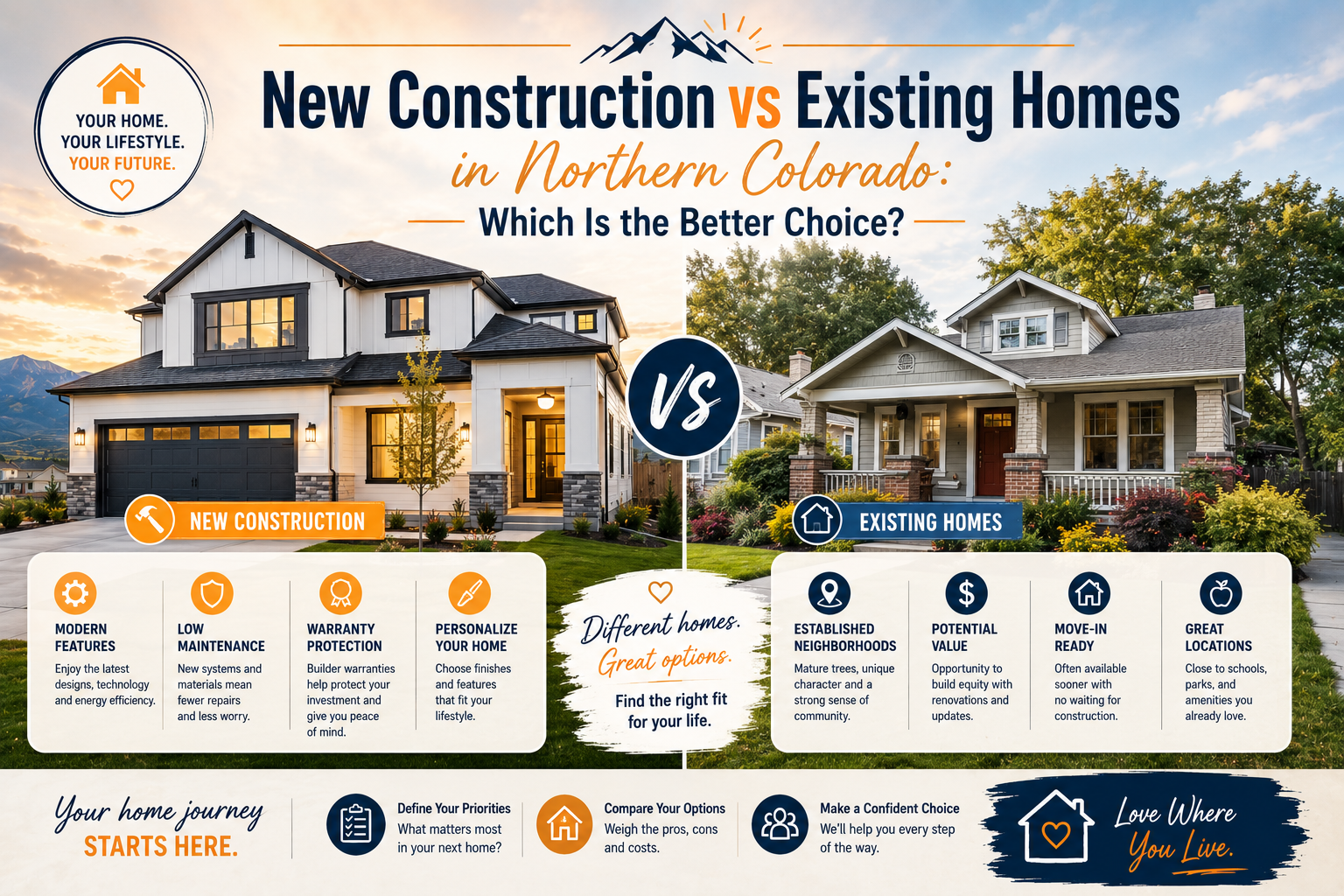
One of the biggest decisions home buyers face is whether to purchase a new construction home or an existing resale property. Both options offer advantages, but the right choice depends on your budget, timeline, lifestyle preferences, and long-term goals.
Throughout Northern Colorado, buyers are comparing new construction homes in Fort Collins, Windsor, Timnath, Loveland, Berthoud, Severance, Greeley, Evans, and Erie against existing homes in established neighborhoods. Understanding the tradeoffs can help you make a more confident decision.
This guide compares new construction homes and resale homes across the factors that matter most to today's buyers.
Thinking about buying new construction?
Get expert guidance on builders, incentives, and contracts — no pressure.
What Is a New Construction Home?
A new construction home is a property that has recently been built or is currently being built by a developer or builder.
Depending on the community, buyers may be able to purchase:
- Quick move-in homes
- Inventory homes
- To-be-built homes
- Semi-custom homes
Many buyers choose new construction because they want modern layouts, updated features, and lower maintenance requirements.
What Is an Existing Home?
An existing home, often called a resale home, has previously been owned and occupied.
These homes can range from recently built properties to homes that are decades old.
Existing homes often appeal to buyers who want established neighborhoods, mature landscaping, and immediate move-in opportunities.
Purchase Price Comparison
One of the first questions buyers ask is which option costs less.
The answer depends on several factors.
New Construction Homes
New homes may include:
- Modern floor plans
- Energy-efficient construction
- Builder warranties
- New appliances and systems
However, buyers should also consider:
- Upgrade costs
- Landscaping expenses
- Window coverings
- HOA assessments
- Metro district obligations
Existing Homes
Resale homes may offer:
- Established landscaping
- Included upgrades completed by previous owners
- Larger lots in some neighborhoods
- Mature communities
However, buyers should also budget for potential repairs, maintenance, and future system replacements.
Looking beyond the purchase price is essential when comparing overall value.
Customization and Personalization
For many buyers, customization becomes the deciding factor.
Why Buyers Choose New Construction
New homes often provide opportunities to select:
- Floor plans
- Cabinet finishes
- Flooring
- Countertops
- Structural options
- Technology features
Buyers who want a home tailored to their preferences often prefer new construction.
Why Buyers Choose Existing Homes
Existing homes may offer greater freedom for future renovations and modifications.
Some buyers appreciate:
- Unique architecture
- Mature landscaping
- Established character
- Custom remodeling opportunities
The tradeoff is that renovations can require significant time and expense.
Maintenance and Repairs
Maintenance is another major consideration.
New Construction Advantages
New homes typically feature:
- New roofs
- New HVAC systems
- New plumbing
- New electrical systems
- Modern building materials
This often results in fewer immediate repairs during the first years of ownership.
Builder warranties may also provide additional protection.
Existing Home Advantages
While older homes may require more maintenance, they often provide a better understanding of how the property has performed over time.
Buyers should carefully evaluate:
- Roof condition
- HVAC age
- Plumbing systems
- Electrical systems
- Foundation condition
Home inspections become especially important when purchasing a resale property.
Energy Efficiency
Energy efficiency is one area where new construction often has an advantage.
Many newer homes include:
- Improved insulation
- Energy-efficient windows
- Modern HVAC systems
- Smart-home technology
- Updated building practices
These features can contribute to lower utility costs and improved comfort.
Existing homes may require upgrades to achieve similar efficiency levels.
Timeline Comparison
Your desired move-in date may heavily influence your decision.
New Construction
Depending on the community, timelines can range from immediate move-in to several months or longer.
To-be-built homes require additional time for:
- Design selections
- Permitting
- Construction
- Final inspections
Existing Homes
Resale homes generally offer a faster path to ownership.
Buyers can often close and move in more quickly once financing and inspections are complete.
If timing is critical, an existing home or quick move-in home may be the better option.
Community Differences
The neighborhood itself often matters as much as the home.
New Construction Communities
Many newer developments feature:
- Parks
- Trails
- Community pools
- Clubhouses
- Planned amenities
These communities are often designed around modern lifestyles and long-term growth.
Established Neighborhoods
Older neighborhoods may offer:
- Mature trees
- Larger lots
- Established schools
- Unique architectural styles
- Strong community identity
Each environment appeals to different buyer preferences.
Which Option Is Better for Different Buyers?
First-Time Buyers
Many first-time buyers appreciate the lower maintenance requirements and warranties associated with new construction homes.
Move-Up Buyers
Move-up buyers often evaluate both options based on location, space needs, and lifestyle goals.
Downsizers
Many downsizers prefer newer, low-maintenance homes with modern layouts.
Investors
Investment goals may determine whether a new construction home or resale property provides a better opportunity.
Common Mistakes Buyers Make
Regardless of which option you choose, avoid these common mistakes:
- Focusing only on purchase price
- Skipping inspections
- Underestimating maintenance costs
- Ignoring HOA and metro district obligations
- Failing to compare multiple communities
- Overlooking future resale value
The most successful buyers evaluate the complete ownership experience rather than a single factor.
Quick Decision Guide
A new construction home may be the better fit if:
- You want modern features
- Customization matters
- Lower maintenance is important
- Energy efficiency is a priority
- You plan to stay long term
An existing home may be the better fit if:
- You need a faster move
- You prefer mature neighborhoods
- Larger lots are important
- You enjoy renovation opportunities
- Character and architecture matter
Frequently Asked Questions
Is new construction more expensive than an existing home?
Not always. Total ownership costs depend on location, upgrades, maintenance requirements, taxes, and community expenses.
Do new construction homes require inspections?
Yes. Independent new construction inspections can identify issues before closing.
Are builder warranties valuable?
Many buyers appreciate the protection builder warranties provide, particularly during the first years of ownership.
Which option has better resale value?
Both can perform well depending on location, condition, market trends, and community growth.
Is a new construction home right for me?
The answer depends on your budget, timeline, lifestyle preferences, and long-term goals.
Final Thoughts
There is no universal answer to the new construction versus existing home debate. Both options offer meaningful advantages, and the right choice depends on what matters most to you.
Before making a decision, compare builders in Northern Colorado, explore multiple communities, review new construction inspections, understand metro districts, and evaluate your long-term plans. The more information you have, the easier it becomes to choose the home that best fits your needs.
About the Author
Mark Leavitt is a Northern Colorado Realtor specializing in new construction homes and builder communities throughout Fort Collins, Windsor, Timnath, Loveland, Berthoud, Severance, Greeley, Evans, and Erie.
He helps buyers compare builders, evaluate communities, understand inspections and warranties, and navigate the new construction buying process throughout Northern Colorado.