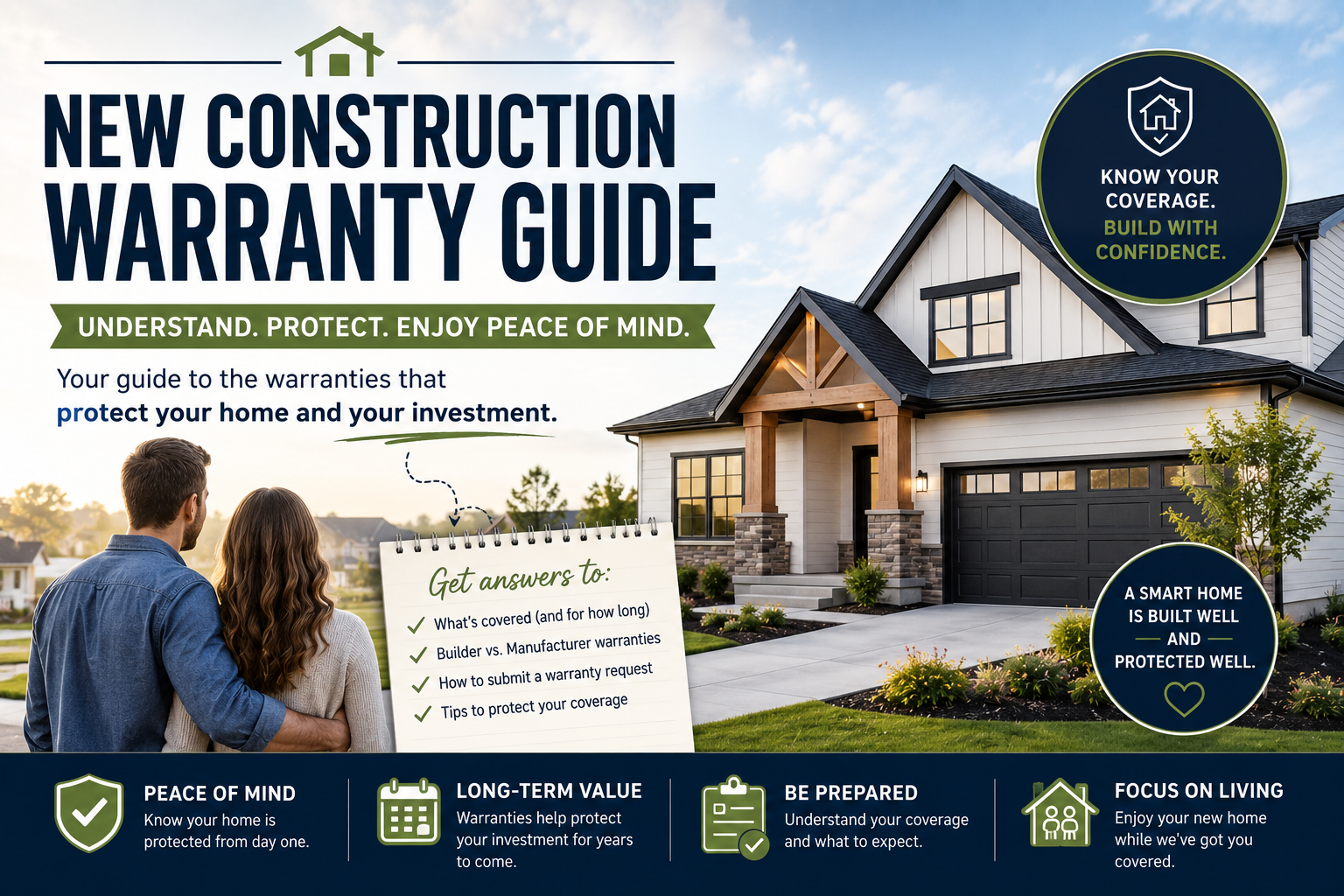
New Construction Warranty Guide: What Northern Colorado Home Buyers Need to Know
One of the biggest advantages of purchasing a new construction home is the warranty coverage that comes with it. Unlike many resale homes, new construction homes typically include builder-backed warranties designed to protect buyers from certain defects and construction-related issues after closing.
However, many buyers assume a warranty covers everything for years after purchase. In reality, warranty coverage varies by builder, warranty provider, and the type of issue involved. Understanding what is typically covered, what may not be covered, and how to properly document concerns can help protect your investment and reduce stress after moving into your new home.
Thinking about buying new construction?
Get expert guidance on builders, incentives, and contracts — no pressure.
What Is a New Construction Warranty?
A new construction warranty is a builder's commitment to repair qualifying defects that arise within specific warranty periods after closing.
While coverage can vary, most builders offer protection for workmanship, materials, mechanical systems, and major structural components for a defined period of time.
Before purchasing a home, buyers should carefully review the builder's warranty documents and understand exactly what is included.
Typical New Construction Warranty Coverage
Most builder warranties follow a tiered coverage structure.
First Year Coverage
The first year generally covers workmanship and material defects that become apparent after move-in.
Examples may include:
- Interior paint concerns
- Trim and finish issues
- Cabinet adjustments
- Flooring defects
- Door and window alignment
- Drywall settling beyond normal expectations
This period is often when homeowners identify and report the majority of warranty items.
Mechanical Systems Coverage
Many builders provide additional coverage for major mechanical systems.
These systems may include:
- Plumbing
- Electrical systems
- HVAC equipment
- Ventilation systems
Coverage periods vary depending on the builder and warranty provider.
Structural Coverage
Structural warranty protection is typically the longest coverage period offered.
Structural components may include:
- Foundation systems
- Load-bearing walls
- Roof framing
- Structural floor systems
Because structural concerns can be significant, buyers should understand how structural claims are evaluated and what conditions must be met for coverage.
What Is Usually Not Covered?
A common misconception is that every issue in a new home automatically qualifies for warranty service.
In many cases, certain items are excluded from coverage.
Potential exclusions may include:
- Normal wear and tear
- Homeowner maintenance items
- Damage caused by neglect
- Landscaping concerns
- Cosmetic damage reported after warranty deadlines
- Appliance issues covered by separate manufacturer warranties
Every builder's warranty is different, so reviewing the specific warranty documentation is essential.
Why Documentation Matters
One of the most important steps buyers can take is documenting issues early and thoroughly.
Clear documentation helps establish timelines, supports warranty claims, and reduces misunderstandings with builders.
The more organized your records are, the easier it becomes to resolve issues if they arise.
How to File a Warranty Claim
Knowing how to submit a warranty request properly can make the process smoother and more efficient.
Step 1: Document the Issue
When you notice a concern, gather as much information as possible.
Helpful documentation includes:
- Photos
- Videos
- Written descriptions
- Dates when the issue was first noticed
Detailed records can help builders evaluate concerns more quickly.
Step 2: Submit Your Request in Writing
Most builders require warranty requests to be submitted through an online portal, email system, or designated warranty department.
When submitting a claim:
- Be specific about the issue
- Include photos when possible
- Provide the location of the concern
- Keep copies of all communication
Written documentation creates a clear record of the request.
Step 3: Track Communication
Warranty departments often manage a large number of requests.
Keep a record of:
- Submission dates
- Follow-up dates
- Builder responses
- Scheduled repair appointments
Staying organized can help prevent delays and confusion.
Step 4: Understand Escalation Options
If a concern is not resolved, review the builder's warranty process to understand available next steps.
Depending on the warranty provider and circumstances, additional review procedures may be available.
Before escalating a dispute, maintain complete documentation and ensure all warranty procedures have been followed.
What to Do Before Closing
The best time to identify issues is before you officially take ownership of the home.
Schedule a Thorough Walkthrough
During your final walkthrough, inspect every room carefully.
Items to review include:
- Doors and windows
- Flooring
- Paint and trim
- Cabinets
- Appliances
- Plumbing fixtures
- Electrical outlets and switches
Creating a detailed punch list before closing can help ensure issues are addressed promptly.
Understand the Warranty Process
Before signing closing documents, ask questions such as:
- How are warranty requests submitted?
- Who handles warranty claims?
- What response times should be expected?
- Are there scheduled warranty review appointments?
Understanding the process ahead of time can eliminate confusion later.
Keep All Documentation
Create a dedicated file for your home purchase documents.
Important records include:
- Purchase agreement
- Builder warranty documents
- Closing paperwork
- Inspection reports
- Warranty claim correspondence
Having everything organized in one location can save significant time in the future.
Common Mistakes New Construction Buyers Make
Many warranty frustrations can be avoided with proper preparation.
Common mistakes include:
- Failing to document issues immediately
- Missing warranty deadlines
- Assuming all defects are covered
- Losing important paperwork
- Skipping independent inspections
- Waiting too long to report concerns
Understanding the warranty process early can help prevent these issues.
Why New Construction Inspections Still Matter
Some buyers assume a builder warranty eliminates the need for inspections. In reality, inspections and warranties serve different purposes.
An inspection helps identify potential concerns before closing, while a warranty provides protection for qualifying issues after closing.
Many buyers of new construction homes in Northern Colorado choose to schedule independent inspections during construction and before closing to gain additional peace of mind.
My Perspective as a Northern Colorado Realtor
Warranty coverage can provide valuable protection, but buyers should never rely on the warranty alone.
I encourage buyers to thoroughly inspect their home, understand warranty procedures, maintain organized records, and ask questions before signing a builder contract.
Taking a proactive approach often leads to a smoother ownership experience and fewer surprises after move-in.
Final Thoughts
A new construction warranty is one of the benefits of purchasing a newly built home, but understanding how it works is critical. Coverage periods, exclusions, reporting requirements, and builder procedures can vary significantly.
Before purchasing a new construction home in Northern Colorado, take time to review warranty documents, understand the claims process, and learn what responsibilities remain with the homeowner. A little preparation can go a long way toward protecting your investment and ensuring a positive homeownership experience.
Related Reading
- new construction homes in Northern Colorado
- new construction inspections
- compare builders in Northern Colorado
- hidden costs of new construction
- metro districts