Here's something I hear fairly often from buyers: "It's a brand new house, so I don't need an inspection." Completely understandable thinking—but it's also exactly what some builders are hoping you'll believe.
I've walked through new construction homes with buyers in Fort Collins, Windsor, and Timnath after they hired inspectors, and the findings have consistently surprised us. New doesn't mean perfect. Here's why you should always get an inspection on your new build.
Thinking about buying new construction?
Get expert guidance on builders, incentives, and contracts — no pressure.
Builders Are Rushing to Close
The housing market in Northern Colorado is competitive, and builders are under pressure to complete homes as quickly as possible. That speed sometimes comes at a cost—items that would be flagged in a quality-controlled build slip through.
What I'm seeing: punch lists that get rushed, finishing work that meets minimum code standards but falls short of what a buyer would expect, and systems that work but aren't optimally installed.
Code Minimums Aren't Quality Standards
A home passing inspection just means it meets minimum building codes. That doesn't mean:
- The HVAC system was installed correctly
- The flashing around windows will actually prevent moisture intrusion
- The electrical work is neat and accessible for future updates
- The insulation meets current efficiency standards
An inspector looks at the home through a different lens than a builder's walkthrough—detail-oriented and focused on what could go wrong down the road.
Common Issues Found in New Construction
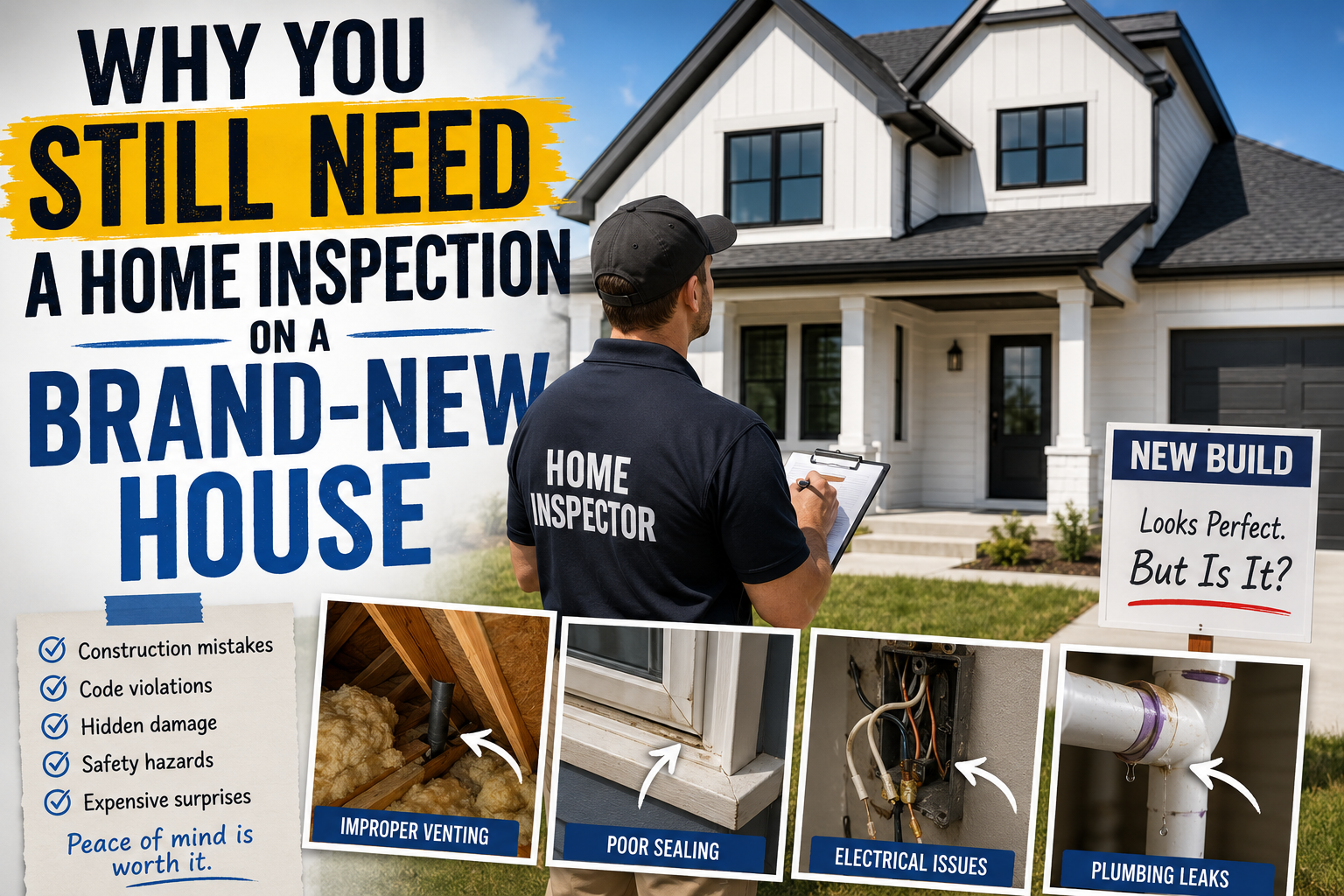
These are things I've seen inspectors flag in new builds around here:
- Missing or improperly installed flashing around windows and doors
- Inadequate attic insulation that will cost you in energy bills
- HVAC ductwork disconnections or kinks that reduce efficiency
- Plumbing leaks hidden behind walls
- Grading issues that direct water toward the foundation
- Missing caulking around exterior penetrations
- Electrical outlets that don't meet current code (especially in older plans being reused)
The Builder's Walkthrough Isn't Enough
Your builder will walk you through the home before closing—this is your punch list opportunity. But they're not looking for the same things an inspector looks for. They're checking that items on their list are checked off. An inspector is looking for code compliance, safety issues, and hidden defects.
I've had buyers thank me for insisting on an inspection after the inspector found issues that would have cost thousands to fix later—issues they'd have never noticed in a casual walkthrough.
When to Schedule Your Inspection
Timing matters:
- Pre-drywall inspection (optional but recommended): Before the walls are closed up, you can see the framing, electrical, and plumbing rough-ins. This is the best time to catch hidden issues.
- Final inspection: Schedule this 1-2 weeks before your scheduled closing. This gives you time to negotiate repairs if needed.
What to Do With Your Inspection Report
Once you have the report:
- Go through it with your real estate agent
- Identify issues that are safety concerns vs. cosmetic
- Work with your agent to request the builder address significant items
- Document everything for your records
The builder isn't obligated to fix every item, but most will address legitimate safety and structural concerns—especially on a home they're still building.
The Bottom Line
Getting an inspection on a brand-new home isn't about distrust—it's about being smart. You're making one of the biggest purchases of your life. Understanding what you're actually buying gives you leverage and peace of mind.
If you're in the process of buying new construction and wondering whether an inspection makes sense, let's talk. I'm happy to share what I'm seeing with builders in the area and help you protect your investment.