Almost every builder in Northern Colorado calls its homes "energy-efficient." That phrase alone doesn't tell you much. One builder may mean a third-party certified home that uses about half the energy of a standard house. Another may mean LED bulbs and a programmable thermostat.
The good news is there's a way to compare: the HERS score. This post explains what it is, what the certifications on the brochure actually mean, and how to use them to compare builders. If you just want our ranking of energy-focused builders, see the best energy-efficient builders in Northern Colorado.
Thinking about buying new construction?
Get expert guidance on builders, incentives, and contracts — no pressure.
What Is a HERS Score?
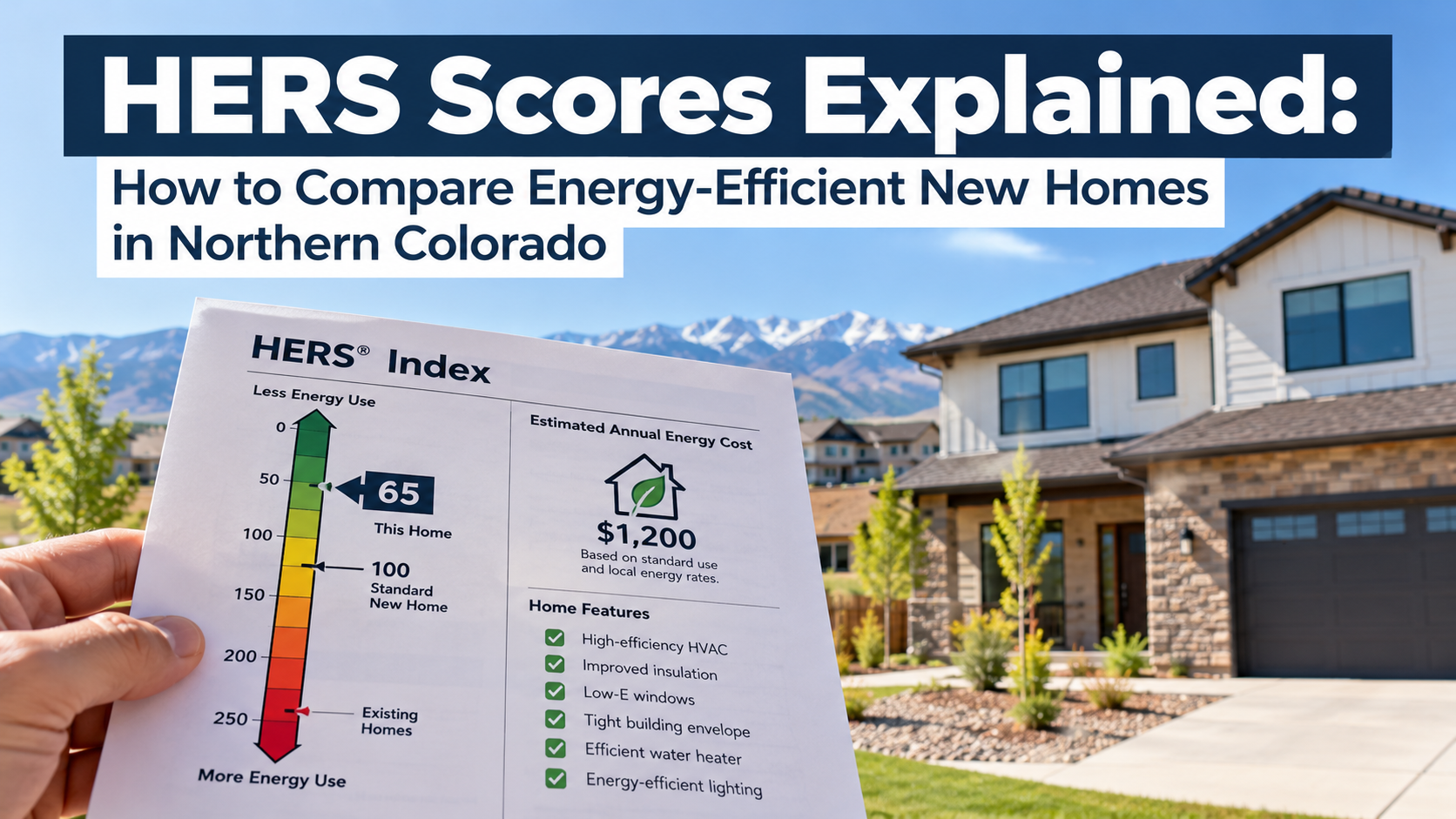
The Home Energy Rating System (HERS) Index is a standardized energy rating done by a certified, independent rater. The rater tests the home, often including a blower door test for air leaks, and models its energy use.
The scale works like a golf score, where lower is better:
- 100 = a reference home built to roughly the 2006 national energy code
- 0 = a net-zero home that produces as much energy as it uses
- Each point is about a 1% difference in energy use compared with the reference home
So a home with a HERS score of 50 is estimated to use about half the energy of the reference home. A home at 70 uses about 30% less.
Why It Matters More Than the Marketing
A HERS score gives you an apples-to-apples comparison between two different builders, even across different floor plans. Marketing language doesn't.
For context: Lennar's local sales team told us Lennar targets a HERS score around 50 in Northern Colorado. Meritage Homes has reported a nationwide average HERS score of 55 (for homes rated in 2017) and says it was the first national builder to be 100% ENERGY STAR qualified. Those are company-reported figures, which is exactly why you want the score for your specific home.
What to ask every builder:
- "What is the HERS score for this plan, or for this exact home?"
- "Is it a projected score or a final tested score?"
- "Can I see the rater's report?"
If a builder can't answer the first question, that tells you something.
The Certifications, Decoded
ENERGY STAR Certified Home An EPA program. Homes must meet efficiency requirements above code and pass third-party inspection and testing. Look for the actual certification, not just ENERGY STAR appliances. Appliances alone don't make the house certified.
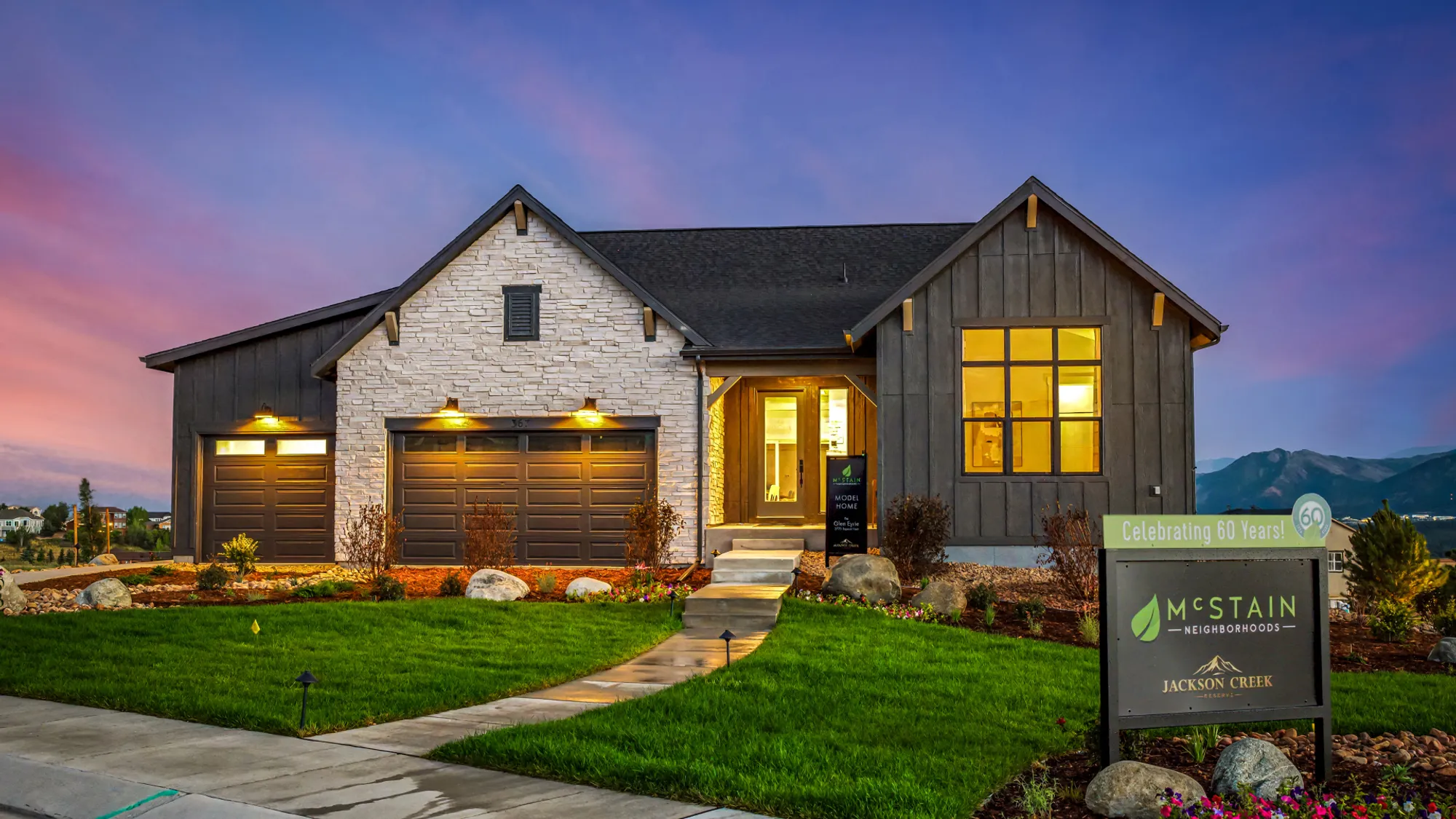
DOE Zero Energy Ready Home (ZERH) A higher bar from the U.S. Department of Energy. These homes are built efficiently enough that adding solar could offset most or all of their energy use. In Colorado, McStain Neighborhoods has built to this standard. One McStain home recognized by the DOE scored a 34 with solar panels.
"Solar-ready" Usually means the conduit and electrical panel space are already in place to add solar later, so you avoid a retrofit. Helpful, but it doesn't make the home itself more efficient.
"Green built" / "energy-efficient construction" Can be meaningful, but it's a marketing term, not a standard. Ask what's behind it.
What to Look for in the Spec Sheet
Beyond the score, these features drive most of the difference:
- Air sealing: the blower door result shows how tight the house is
- Insulation: levels in the attic and walls
- Windows: low-E, double- or triple-pane
- HVAC: furnace and AC efficiency ratings, or a heat pump
- Water heater: tankless, heat pump, or high-efficiency tank
- Ventilation: a fresh-air system, which matters more as homes get tighter
Is Energy Efficiency Worth Paying For?
Usually, if it's verified. A lower HERS score means lower utility bills every month you own the home, and it can help at resale. But don't pay a premium for a label. Two things to keep in mind:
- Compare the full monthly cost. Utility savings of $50 to $100 a month can be wiped out by a metro district tax or a higher HOA. Our monthly cost breakdown covers all the pieces.
- Efficient doesn't have to mean expensive. Several energy-focused builders compete in the attainable price range. See our guide to new construction homes under $500K.
How I Help Buyers Compare
When a client is weighing two builders, I ask both for the HERS score and spec sheet on the specific homes, then put them side by side with price, taxes, and incentives. Energy performance is one piece of the true cost of owning a home, and it's a piece most buyers never see. Reach out if you want help comparing.
Frequently Asked Questions
What is a good HERS score for a new home? Newer code-built homes often land in the 60s. Scores in the 40s and 50s are strong, and anything near 0 is approaching net zero. Compare scores between homes rather than relying on a single cutoff.
Do all new homes in Colorado have a HERS score? No. Many builders have homes rated, but not all, and not every plan. Ask the builder directly.
Is an ENERGY STAR home the same as a Zero Energy Ready home? No. Zero Energy Ready is a stricter DOE standard that builds on ENERGY STAR requirements and adds more efficiency and solar-readiness requirements.
Which Northern Colorado builders focus most on energy efficiency? McStain Neighborhoods, Meritage Homes, Lennar, and Aspen Homes are among the builders with the clearest energy-efficiency positioning. See our full ranking.