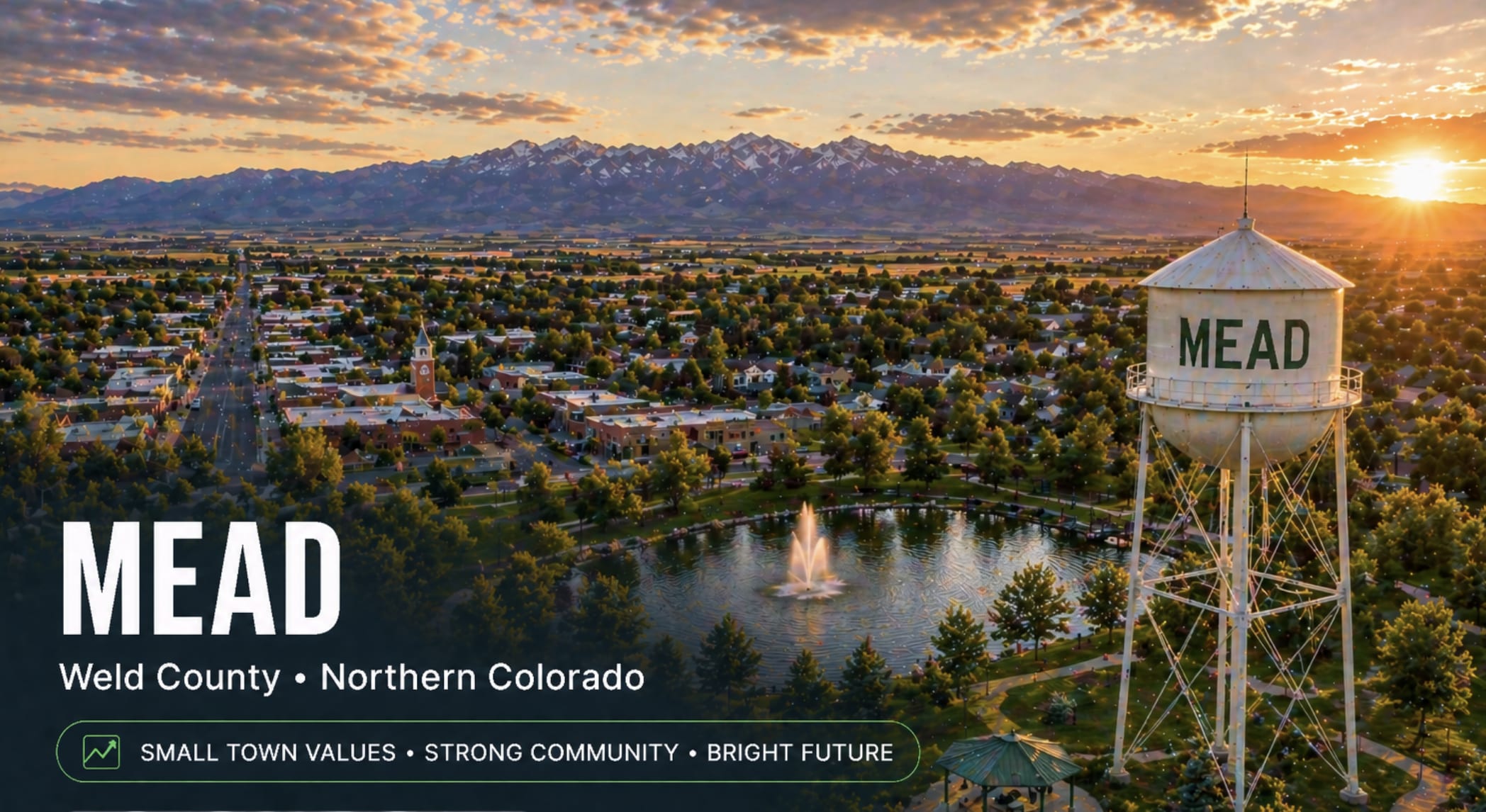
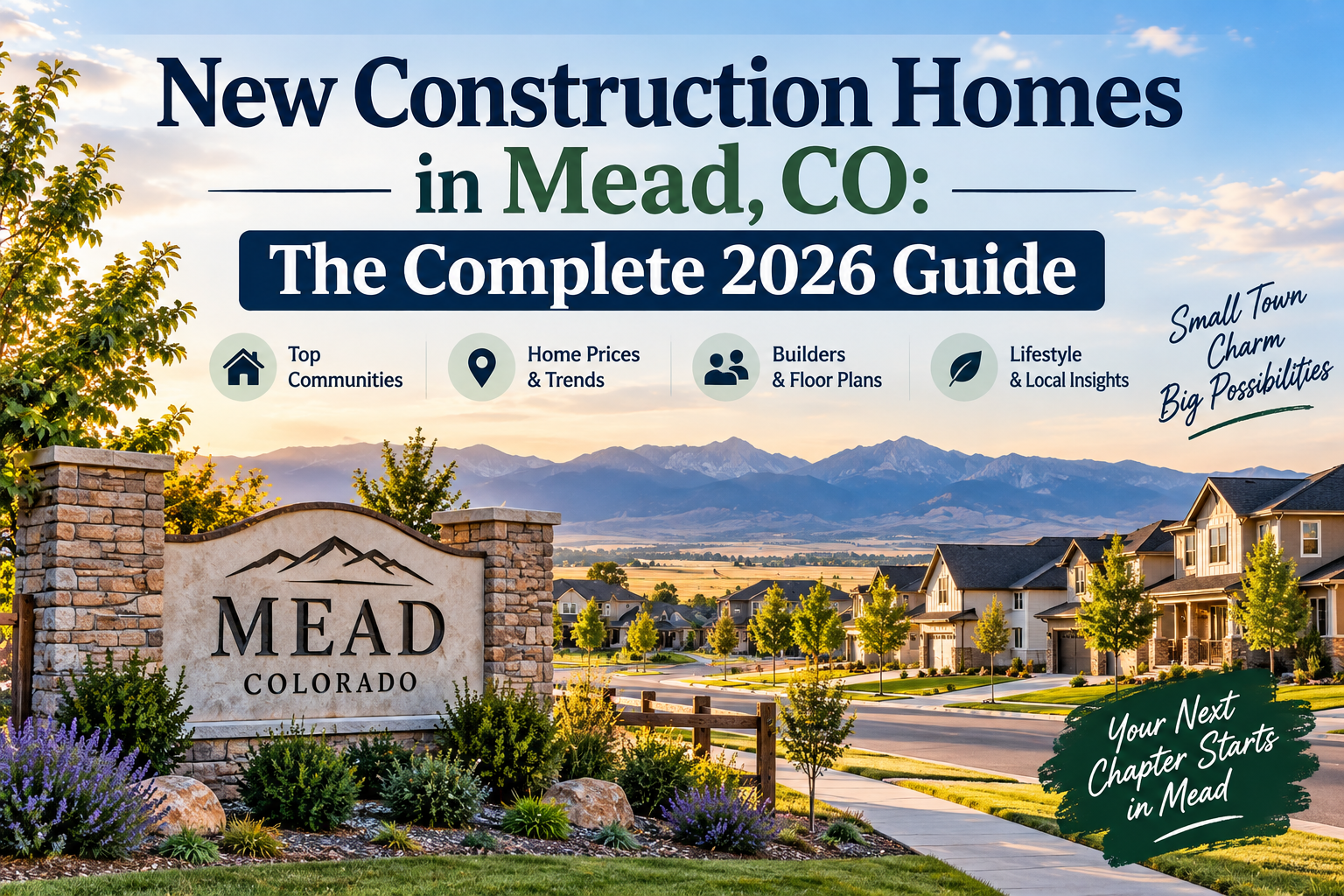
Mead is a small town in Weld County located just east of I-25, between Longmont and Johnstown. It's become a practical option for buyers who want a quieter setting with quick highway access. Compared to Longmont, Mead feels more rural-residential and less built-up — but it still benefits from being close to the corridors that get you north toward Loveland and Fort Collins, or south toward the Denver-metro edge.
Thinking about buying new construction?
Get expert guidance on builders, incentives, and contracts — no pressure.
Why buyers choose Mead
Buyers often land on Mead when they want newer housing without committing to a larger city's footprint. Many of the newer neighborhoods here are built around a genuinely small-town lifestyle — less commercial activity inside town itself, with conveniences a short drive away rather than on every corner.
The tradeoff: parts of Mead can feel limited on immediate amenities, and growth happens in pockets rather than across the whole town. Neighborhood choice matters more here than in bigger markets — for highway noise, for how built-out the area already feels, and for what future phases might bring next door.
For most buyers, Mead ends up being a location strategy first and a home search second: get I-25 access, stay in Weld County, then pick the community that fits your budget once taxes, HOA rules, and real upgrade costs are on the table.
The 3 active communities in Mead right now
- Red Barn Meadows — built by Century Communities, single-family.
- Mead Crossing — from $400,000, built by Rise Well Homes, single-family and townhome. Currently listed as coming soon, so pricing and lot release timing are still settling.
- Cordovan — from $375,000, with Rise Well Homes and Tri Pointe Homes both building here, single-family and townhome.
Inventory here is genuinely tighter than in nearby Longmont or Loveland, so availability often comes down to phase timing and quick move-in releases rather than a wide standing selection.
What to verify before you tour
- Ask for the metro district disclosure. Metro district taxes are common in Weld County new developments — get your lender to estimate the real payment using current tax guidance before you fall in love with a plan.
- Get the full HOA documents, not a summary. Some Mead HOAs are light-touch; others regulate fencing, parking, and landscaping timelines in detail.
- Ask for an all-in pricing worksheet tied to your specific lot and plan. Base price rarely survives contact with lot premiums and design center upgrades.
- Compare any builder-lender incentive against your own financing. Confirm rate-lock rules, appraisal-gap terms, and deadline clauses before assuming the incentive is free value — especially if the build timeline could shift.
Is Mead right for you?
Mead works well for buyers who want small-town living with genuinely easy highway access and are comfortable with a tighter, phase-driven inventory. It's a tougher fit if you want a wide selection to choose from right now, or if being a short drive from most day-to-day conveniences (rather than having them in town) isn't something you want to live with.
Lot placement inside a Mead neighborhood can matter more than people expect — homes closer to busier roads, future phases, or drainage corridors can feel different day to day and affect resale down the line. If you want a second set of eyes on a community, a pricing sheet, or a contract before you sign, that's exactly the kind of thing I help buyers work through — no cost to you.